


How to Choose the Right Optical Sorting Machine for Your Processing Line?
Release time: 2026-10-27
Table of Contents
Choosing the right sorting equipment is an important step in improving product quality, reducing material waste, and maintaining stable production. Different processing lines handle different materials, from rice, grains, seeds, and nuts to medicinal herbs, mineral ores, and recycled plastics. Each application has its own requirements for detection accuracy, processing capacity, feeding structure, and material handling.
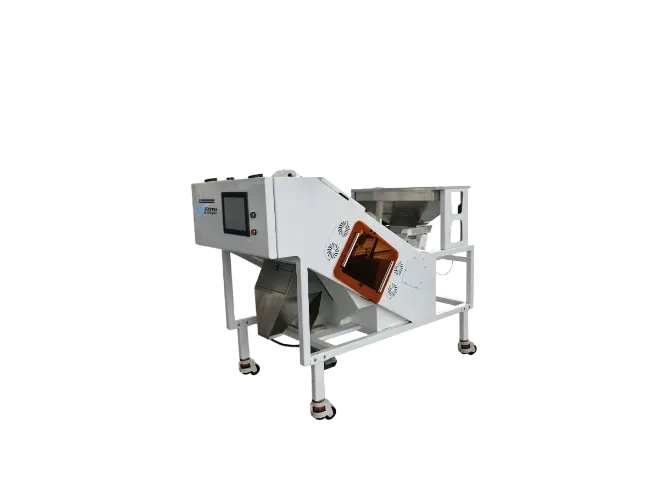


Hefei TOTEM Intelligent Technology Co., Ltd., founded in 2020 and headquartered in Hefei Economic and Technological Development Zone, integrates research and development, production, sales, and service. The company develops CCD intelligent and near-infrared (NIR) sorting equipment for agricultural products, food processing, mining, and resource recycling. When evaluating an optical sorting machine, processors should consider not only the machine’s detection technology but also how well its design matches the material and production conditions.
1. Identify the Material You Need to Sort
The first step is to define the material being processed and the types of defects or impurities that must be removed. Different materials have different physical properties, so a machine designed for rice may not be the best choice for plastic flakes or fragile herbs.
For rice and grain processing, CCD-based equipment can identify color differences, chalky kernels, immature grains, damaged particles, and visible foreign materials. Models such as the 6SXM-128 and 6SXM-192 are designed for rice, beans, seeds, and other granular agricultural products. The CCD-10 model, with a stated capacity of 6–8 t/h, is intended for higher-throughput rice processing.
For nuts, tea, coffee beans, and medicinal herbs, the condition of the material and the risk of product damage also matter. A belt-fed design can provide gentler transportation for irregular or fragile products. For plastic recycling, material composition may be as important as color. Equipment combining RGB imaging, near-infrared sensing, and other optical detection methods can help distinguish different plastic types, including PET, PP, PE, ABS, and PS.
Before selecting a machine, list the target material, the defects to be removed, the acceptable level of product loss, and whether the equipment needs to handle one material or several.
2. Match Processing Capacity to Your Production Line
The machine’s rated processing capacity should match the actual output of the production line. Equipment that cannot keep up with upstream production may create a bottleneck, while a machine with excessive capacity may increase investment and operating costs unnecessarily.
The products available cover a range of processing requirements:
| Machine or model | Stated capacity | Typical application |
| Mini CCD color sorter, 6SXZ-32 | 300–500 kg/h | Tea, coffee beans, seeds, and fine materials |
| 6SXM-128 rice color sorter | 1.5–3.2 t/h | Rice, seeds, beans, and cereals |
| 6SXM-192 multi-grain sorter | 2.0–5.0 t/h | Multiple grain and agricultural products |
| CCD-10 rice color sorter | 6–8 t/h | High-throughput rice processing |
| Model 1200 belt-type optical sorter | 1.0–3.0 t/h | Nuts, vegetables, plastics, herbs, and other bulk materials |
| Model 1200 double-layer belt ore sorter | 2.0–5.0 t/h | Quartz, feldspar, calcite, and other non-metallic ores |
These figures are product specifications, not guaranteed output under every operating condition. Actual throughput can vary with material size, feeding uniformity, defect concentration, sorting settings, and the required finished-product quality.
When comparing an optical sorting machine, use the expected production rate of your own material as the reference point. If possible, arrange a material test before purchase to confirm that the proposed capacity and sorting results can be achieved together.
3. Choose the Right Detection Technology
Detection technology determines which differences the machine can recognize. Conventional color sorting primarily uses visible color information, while more advanced systems may combine multiple imaging methods to identify differences in shape, texture, or material composition.
CCD imaging is widely used in grain and food sorting. High-resolution sensors capture color variations and surface defects, while image-processing algorithms classify particles and control the rejection system. For example, the 6SXC-126 rice sorter uses a 2048-pixel CCD sensor and a seven-chute structure. Its listed sorting accuracy is above 99.9%, according to the supplied product specifications.
AI-based recognition can help classify complex defects and adapt sorting parameters to different materials. Some machines combine RGB and near-infrared sensing to improve material identification, which is particularly relevant to mixed-plastic recycling.
Specialized applications may require additional detection methods. The multi-channel corn toxin sorter, for instance, uses UV-enhanced multispectral imaging and AI analysis to identify kernels suspected of mold or aflatoxin contamination. Such a system should be evaluated according to its validated detection performance and the intended safety application. A stated cleaning purity rate alone does not establish an equivalent toxin-removal rate.
When selecting a color sorting machine, check the actual detection method, the defects it can identify, and whether the technology has been tested with your material. A longer list of technical features does not automatically mean better results for every application.
4. Decide Between Chute Feeding and Belt Conveying
The feeding structure affects how material moves through the inspection area and how accurately the system can separate individual particles. Chute-fed and belt-fed machines serve different processing needs.
Chute-type equipment is commonly used for free-flowing granular materials such as rice, grains, and seeds. Gravity feeds the material through the sorting area, making this structure suitable for many conventional grain-processing lines. Models such as the 6SXM-128 and 6SXC-126 use chute-based designs.
A belt type optical sorter is worth considering when the material is fragile, irregular, relatively large, or difficult to distribute consistently through a chute. Belt conveying can provide more controlled transportation and reduce damage caused by unsuitable handling. It is used in applications involving nuts, dehydrated vegetables, coffee beans, medicinal herbs, and recycled plastics.
The model 300 belt sorter has a stated capacity of 0.6–1.2 t/h, while the model 1200 belt sorter is listed at 1.0–3.0 t/h. A separate high-throughput double-layer belt ore sorter is specified at 2.0–5.0 t/h for non-metallic minerals.
The choice should depend on the material’s shape, fragility, surface condition, and required throughput. It is also useful to inspect the feeding system, conveyor surface, cleaning access, and reject collection arrangement before making a decision.
5. Compare Sorting Accuracy, Carry-Out Ratio, and Product Loss
Sorting performance should not be judged by a single number. Accuracy, cleaning purity, carry-out ratio, and the amount of acceptable material rejected describe different aspects of operation.
Cleaning purity indicates the purity of the sorted output under the manufacturer’s stated test conditions. Carry-out ratio is another specification used to describe sorting performance, but its precise definition and test method should be confirmed with the supplier. Neither figure should be treated automatically as the percentage of defective particles removed.
For example, the supplied specifications list a cleaning purity rate of at least 99.9% for the CCD-10 rice sorter and at least 99% for several belt-type models. These values should be compared only after confirming that the testing conditions and calculation methods are comparable.
A useful evaluation should include at least three questions:
- Does the machine remove the target defects at the required level?
- How much acceptable material is rejected along with the defects?
- Does the finished product meet the buyer’s quality requirements at the intended processing rate?
A machine that achieves high output purity but rejects too much good material may not deliver the best overall yield. Material testing and clear acceptance criteria can help establish a practical balance between purity, capacity, and product recovery.
6. Check Power, Air Supply, and Installation Requirements
Utility requirements affect installation costs and ongoing operation. Before purchasing equipment, check its rated power, voltage, compressed-air requirements, dimensions, weight, and available installation space.
The supplied products illustrate the differences between machine types. The mini CCD sorter 6SXZ-32 is listed at 0.7 kW, with a working air pressure of 0.2–0.4 MPa and air consumption of no more than 120 L/min. The 6SXM-128 is rated at no more than 2.5 kW, while the model 300 belt sorter is listed at 1 kW. The double-layer belt ore sorter has a stated power requirement of 7 kW.
These figures show why utility planning should be based on the specific model rather than the general equipment category. Confirm the electrical supply and compressed-air capacity at the installation site. For machines with pneumatic ejectors, insufficient or unstable air supply may affect sorting performance.
Installation planning should also account for feeding and discharge conveyors, material storage, maintenance access, dust collection where required, and the space needed to remove components for servicing. In continuous production environments, these practical details can influence uptime as much as the machine’s headline specifications.
7. Consider Material Compatibility and Future Production Needs
Some processors handle only one material, while others need to switch between several product types or grades. If the same production line processes different grains, seeds, nuts, or other materials, look for adjustable parameters, recipe storage, and an interface that makes changeovers manageable.
The 6SXM-192 multi-grain sorter is designed for materials including rice, corn, beans, wheat, millet, sesame, and seeds. Its specifications list a processing capacity of 2.0–5.0 t/h. Other compact CCD models are designed for smaller or finer materials, including tea leaves, coffee beans, spices, and seeds.
For plastic recycling, the requirements are different. A 3D material sorting machine using RGB and near-infrared detection is designed to help separate mixed plastics based on differences in composition, color, and shape. A conventional grain sorter should not be assumed to provide the same material-identification capabilities.
If production requirements may change, confirm which materials the machine can process, whether new sorting recipes can be configured, and whether the supplier can test new materials. Choosing for realistic future needs can reduce the risk of purchasing equipment that becomes unsuitable after a product change.
8. Evaluate Maintenance and Long-Term Operating Costs
Purchase price is only one part of the total cost of ownership. Regular cleaning, wear parts, compressed-air consumption, electricity use, calibration, and technical support all affect the cost of operating sorting equipment.
Check whether the machine provides convenient access to its cameras, lenses, feeding components, and ejection system. Stainless steel contact parts can be useful in food-processing environments, while dust-resistant construction and suitable protection may be important in mineral or recycling applications.
Ask the supplier about routine inspection intervals, spare-part availability, service response, software support, and operator training. For a line that runs for extended periods, the ability to perform routine maintenance without lengthy shutdowns is particularly important.
An effective maintenance plan should include regular inspection of the optical system, cleaning of material-contact areas, checking the air supply and ejectors, and monitoring changes in sorting results. Following the manufacturer’s instructions helps maintain consistent performance and identify problems before they disrupt production.
9. Use a Practical Checklist Before Purchasing
Before selecting a machine, compare potential models against the same operating requirements rather than relying on product descriptions alone.
| Selection factor | What to confirm |
| Material type | Grain, rice, nuts, herbs, minerals, plastics, or other materials |
| Defect identification | Color variation, damaged particles, foreign matter, or material composition |
| Processing capacity | Required output under actual material conditions |
| Feeding structure | Chute or belt, based on material characteristics |
| Sorting performance | Purity, defect removal, acceptable-material loss, and test conditions |
| Utilities | Power supply, air pressure, and air consumption |
| Installation | Dimensions, weight, space, and connection requirements |
| Maintenance | Cleaning access, spare parts, training, and service support |
| Future requirements | Material changes, recipe adjustment, and production expansion |
Where possible, provide the supplier with representative samples of both acceptable and defective material. Ask for a test report that explains the test conditions, processing rate, output purity, rejected material, and any limitations. This makes comparisons between different machines more meaningful and helps avoid choosing equipment based only on headline figures.
Conclusion
The right sorting equipment depends on the material being processed, the defects that need to be identified, the required production rate, and the available installation conditions. Grain processors may prioritize CCD detection, chute configuration, and throughput, while operators handling fragile products may benefit from belt conveying. Plastic recycling and specialized mineral sorting may require different imaging and material-recognition capabilities.
Hefei TOTEM Intelligent Technology Co., Ltd. develops CCD and near-infrared sorting solutions for agricultural products, food processing, mining, and recycled resources. By comparing detection technology, feeding structure, processing capacity, operating requirements, and verified sorting results, processors can select an optical sorting machine that fits their production line instead of relying on a single specification or a broad product label.
Frequently Asked Questions
1. What is the difference between an optical sorting machine and a color sorting machine?
An optical sorting machine is a broad term for equipment that uses optical sensing to identify differences between materials. A color sorting machine typically focuses on color differences, although some models also use image-processing algorithms and additional sensing technologies to detect defects or other characteristics.
2. When should I choose a belt type optical sorter?
A belt type optical sorter is worth considering when materials require controlled, gentle conveying or are irregular in shape. Typical applications include nuts, dehydrated vegetables, coffee beans, medicinal herbs, plastics, and other materials for which stable belt feeding can support effective inspection.
3. How do I determine the required processing capacity?
Start with the actual hourly output required by the production line, then consider the material’s characteristics, defect concentration, and required finished-product quality. Confirm the proposed capacity through a material test, because rated throughput may differ from achievable output under specific operating conditions.
4. Does a cleaning purity rate of 99% mean that 99% of defects will be removed?
No. Cleaning purity and defect-removal rate are different measurements. The stated purity rate should be interpreted according to the supplier’s testing method and definition. For specialized applications such as toxin detection, request validated performance data specific to the target contaminant.
5. What information should I provide when requesting a machine recommendation?
Provide the material type, typical particle size and condition, target defects, required hourly capacity, acceptable product loss, available power and compressed air, and installation space. Representative samples and clear quality requirements help the supplier recommend and test a suitable configuration.

